Polymathy and the Soul: Why We Should Not Limit Ourselves
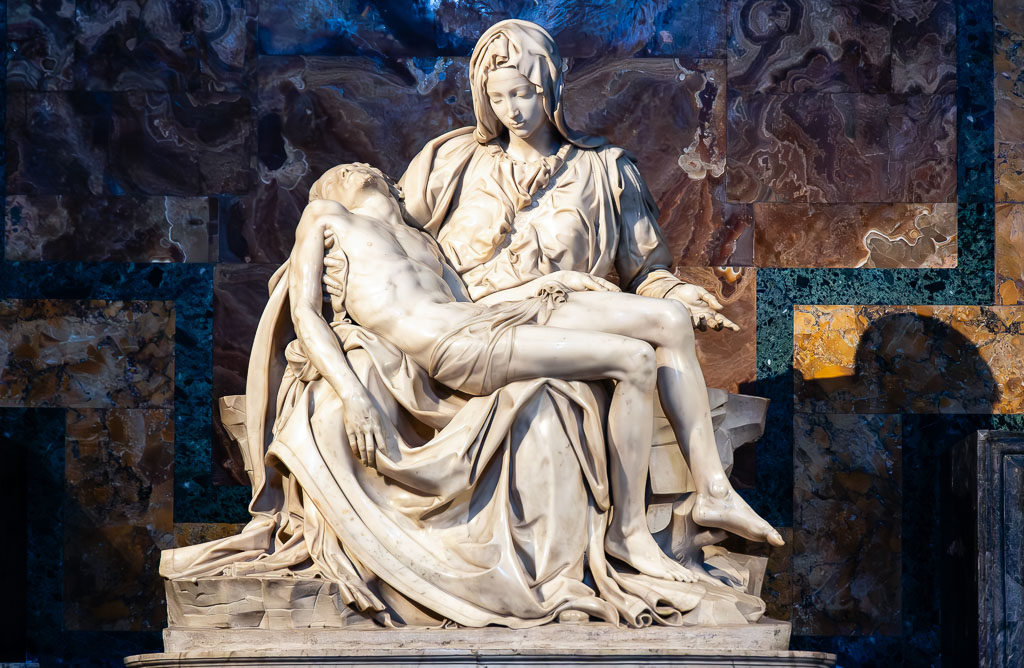
In one of the oldest posts on this blog, I briefly wrote about the Renaissance man as a trend. If you are not familiar with the term, it can be summarized as something like “(...) a person with extensive knowledge and skill in multiple fields, embodying the ideal of polymathy or the homo universalis.”
Now that I am reading The Art of Reading Creatively by Alfonso López Quintás, the concept has resurfaced in my mind. Also, the many videos and comments on various social media pages that oppose the interest in becoming an expert in multiple areas and having broad interests come to mind.
In my understanding, they advocate for a more medieval system of oratores, bellatores, laboratores; not in the hierarchical sense, but in the sense of specializing in a single field. In rigidity. Because yes, every task can open several avenues of research, and that in itself could be considered movement, but to what extent is it merely walking in circles?
Alfonso López, in his book, emphasizes the importance of the relationships between things, their symbolism, and the associations between fields that, formally, may not seem related but, when integrated, form a complete and beautiful unity: “By giving a tangible form to such confluences of fields, the artist luminous demonstrates the enhancement of reality through the transfigurations he experiences. This form of light constitutes the artistic truth, the peculiar rationality of art.” — p. 49, The Emergence of Diverse Fields
To live creatively, we must be open to deepening our perspective of the world and to nourishing ourselves from the fruits of the different branches of knowledge within our reach.
I, who am studying a career that precisely combines the fields of history and art, constantly experience these leaps between different areas of knowledge. The reconstruction of history is not only in the hands of a historian, but also involves a wide range of professionals from the most diverse academic, practical, and scientific specialties. And, putting myself in the eyes of someone unaware of this reality, I could say that it is counterproductive to direct your gaze to different places at the same time. What sense does it make to consult a source of architectural, archaeological, political, or literary nature if you are not specializing in any? At the end of the day, you will not know how to reconstruct a ruin or lead an army to war. We all know the saying: “He who grasps too much, holds little.”
One could argue that, in history, it makes sense because the purpose is to reconstruct something to which we have no access, and any source is valuable. And that is true. But how different is this from the matter at hand? Why has curiosity about the world around us been detached from the task of illuminating and nourishing our soul or intellect?
I have the sense that the work of the artist has, in some way, been corrupted by the necessity to produce. I understand that if being an artist is your profession, your purpose is to produce in order to live, but from a place of lack, it is difficult to create anything of quality. Yet you will always be thirsty if you drink from that source.
For this reason, perhaps the most logical approach is to be an artist as a condition, as a way of being. Because artists are not only musicians, painters, architects, or singers. An artist is one who absorbs reality and manifests their interpretation in the material world. I believe the humanist man did not make himself with the purpose of being great, but out of simple interest or curiosity about many things.
I would say, perhaps as a conclusion, that I encourage everyone not to be limited by the titles they have been given, nor by the deficiencies or difficulties they have chosen to face, nor by the persona they have assumed. Dare to experiment and to explore the possibilities within your reach, without worrying whether it will be productive or “appropriate.” Because the richness of an experience is perceived with the heart, not the intellect:
"It is only with the heart that one can see rightly; what is essential is invisible to the eye." — The Little Prince, Saint-Exupéry